
Addressing the issues that matter

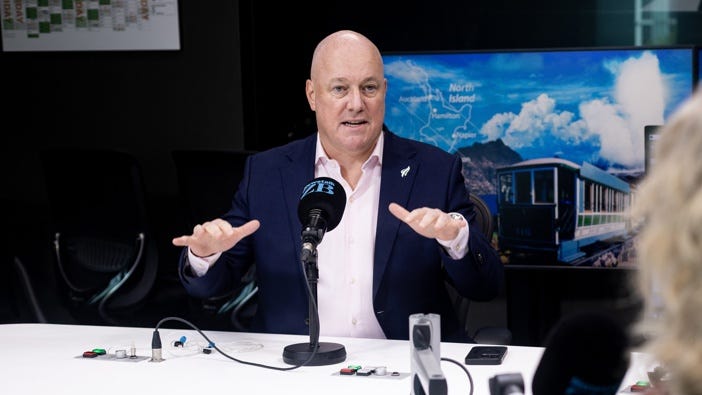
Photo credit: Dean Purcell, Newstalk ZB
To say the Prime Minister has had a rough couple of weeks is an understatement.
But yesterday’s surprise announcement that, if re-elected, National would hold a referendum about our MMP electoral system, clearly illustrates where the party leader’s focus is – and it’s not the interests of New Zealanders.
In an interview on Newstalk ZB, not only did Luxon suggest that there should be a referendum about MMP without proposing what an alternative could be, he also said he wanted more National Party Cabinet ministers, not “some yahoo or numpty from some other party” at the decision-making table.
Some commentators have argued that his comment was a reflection of his frustration with his coalition partners Act and NZ First. While some people might understand that, particularly with NZ First leader Winston Peters’ recent comments in the House that Chinese-born New Zealand Green MP Lawrence Xu-Nan, should go back to where he came from, that’s not a reason to suggest the electoral system should change.
More than 30 years ago, New Zealanders voted to move from the First Past the Post (FPP) electoral system to the Mixed Member Proportional (MMP) electoral system to not only move away from a situation where a party who won the fewer votes overall could end up the government (due to the number of electorate seats it won) but also to have a Parliament that would be more representative of New Zealand. A more recent referendum on the voting system, held in in 2011, saw nearly 58 percent in favour of keeping MMP – higher than the 54 percent who supported MMP over FPP in the 1993 referendum.
Options for governing
MMP allows for a range of governing arrangements by working with other parties through, for example, a governing coalition, which the Government is now, to a minority government which retains power through confidence and supply agreements with one or more parties – which New Zealand has had in the past.
Luxon chose to form a three-way coalition – and in doing so, committed to working with two other parties to govern. Just because it isn’t going well at a point in time, doesn’t mean you can announce that your solution is to change the voting system.
The issues that matter
What’s more, New Zealand’s electoral system doesn’t appear in the of top issues concerning New Zealanders. In the July IPSOS’ issues monitor the top issues were:
- Inflation/Cost of living
- Healthcare/hospitals
- The economy
- Housing/price of house
- Unemployment
These are the issues that matter most to New Zealanders, not whether we need a new electoral system. The electoral system doesn’t even appear in the top 20. The research also showed Labour as the political party most capable of managing all five of New Zealanders’ top concerns.
Luxon’s surprise announcement has inevitably drawn attention, and time, not only from him but from his Ministers and National MPs. This was time that could have been spent thinking about addressing the issues that mater to voters, whose interests they were elected to represent.
Well put, Jacqui. Look at your list - four of the top five issues are economic. Cost of living, the economy, housing, unemployment. The fifth is health, which comes down to funding.
A referendum on MMP touches none of them, and that's the point. When the numbers that matter are moving the wrong way, the surest move is to change the subject to something that isn't on the scoreboard at all.
The electoral system didn't cause the 11-year-high unemployment. Coalition friction didn't either. Those came from economic choices. Picking a fight about the voting system fixes none of them. It just fills the news cycle with something other than the record.
But MMP permits arrangements that destroy the promises made to the electorate. True MMP should be enforced, like this: https://peterlcollins.substack.com/p/how-can-we-make-mmp-work-better